Complete 77.37.186 Gear Manufacturing Process and Advantages

04-01-2026

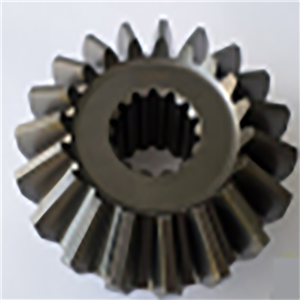
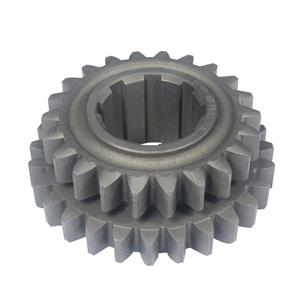
Taking the spiral bevel gears and straight bevel gears mainly produced by small and medium-sized gear factories in Wenling as examples, the complete manufacturing process of gears consists of six core stages: blank preparation — rough machining — semi-finishing — heat treatment — finishing — inspection and assembly. Each process is closely linked to ensure the precision, strength and service life of gears. The detailed process breakdown and process advantage analysis are as follows:
I. Complete Manufacturing Process of Gears

Stage 1: Blank Preparation — Lay the Foundation for Strength

  1. Core Processes: Material cutting → Forging blank making → Annealing treatment

    • Material cutting: According to the weight and size of the finished gear, round steel is cut into blanks of fixed weight by sawing machine or CNC cutting machine, ensuring that the weight error of blanks is ≤ ±2%.

    • Forging blank making: Adopting die forging process (the mainstream scheme for small and medium-sized gear factories), the blanks are heated to 1100–1200℃ and then pressed into rough shapes similar to gears (including gear blank profile, hub and preformed shaft hole) through the dies of forging press.

    • Annealing treatment: The forged blanks are cooled slowly or sent to annealing furnace for heat preservation to eliminate forging stress and reduce hardness (Brinell hardness HB180–220), so as to facilitate subsequent cutting processing.

  2. Process Purpose: Eliminate internal porosity, air hole and other defects of metal, make the metal fibers distribute continuously along the gear tooth profile direction, and improve the bending resistance and impact resistance of gears.

Stage 2: Rough Machining — Remove Allowance and Refine the Shape

  1. Core Processes: Rough turning → Milling (or drilling)

    • Rough turning: On ordinary lathe or CNC lathe, the oxide skin and most of the machining allowance on the surface of blanks are quickly removed, and the preliminary shapes of the outer circle, end face, hub and shaft hole of gears are processed, with a finishing allowance of 0.5–1.5mm reserved.

    • Milling/Drilling: For gears with keyways and bolt holes, milling machines are used to process keyways and drilling machines are used to complete hole position processing to ensure the coaxiality between hole positions and shaft holes.

  2. Process Purpose: Provide uniform machining allowance and stable positioning reference for subsequent finishing.

Stage 3: Semi-finishing — Process the Tooth Profile Embryo

  1. Core Processes: Finish turning → Hobbing/gear shaping

    • For spur gears and mass-produced straight bevel gear blanks: Hobbing process is adopted, and the tooth profile is cut through the generating motion of hob and workpiece, with a machining allowance of 0.1–0.3mm reserved for heat treatment.

    • For spiral bevel gears and internal gears: Gear shaping process is adopted, and the high-precision tooth profile embryo is obtained through the reciprocating cutting of gear shaper cutter.

    • Finish turning: High-precision processing is completed on CNC lathe to ensure that the perpendicularity tolerance between shaft hole and end face is ≤ 0.03mm, the dimensional tolerance of outer circle reaches IT7 grade, and the surface roughness Ra ≤ 1.6μm; for bevel gears, precise conical surface reference needs to be processed to match the tooth profile machining angle in the subsequent process.

    • Hobbing/Gear Shaping: The process is selected according to the gear type:

  2. Process Purpose: Process the basic tooth profile of gears and reserve reasonable allowance for heat treatment and finishing.

Stage 4: Heat Treatment — Strengthen Gear Performance

  1. Core Processes: Carburizing and quenching (or quenching and tempering) → Tempering → Straightening

    • Carburizing and quenching: For heavy-duty gears (such as construction machinery bevel gears), the gear blanks are put into carburizing furnace, carburized at 900–930℃ and then quenched, so that the hardness of tooth surface reaches HRC58–62, and the core maintains toughness of HRC30–40, taking into account wear resistance and impact resistance.

    • Quenching and tempering: For light-duty gears, quenching + high-temperature tempering is adopted to obtain uniform sorbite structure, with hardness HRC25–35, so as to improve comprehensive mechanical properties.

    • Tempering and Straightening: Timely tempering is carried out after quenching to eliminate stress. If the gear is deformed, precision straightening is carried out by press, and the radial runout of gear ring is controlled to be ≤ 0.05mm.

  2. Process Purpose: Greatly improve the hardness and wear resistance of tooth surface and ensure the service life of gears under heavy-load and high-speed working conditions.

Stage 5: Finishing — Ensure Gear Precision

  1. Core Processes: Gear grinding → Hole grinding/hole lapping → Chamfering and deburring → Cleaning

    • Gear grinding: The core process of gear finishing, CNC gear grinding machine is adopted, and the tooth surface is ground by generating method or forming method to correct the deformation caused by heat treatment, so that the tooth profile precision reaches grade 6–8 of GB/T 10095, and the surface roughness Ra ≤ 0.8μm; special spiral bevel gear grinding machine is needed for spiral bevel gears to ensure the precise contact area of tooth surface.

    • Hole grinding/Hole lapping: Grinding or lapping the shaft hole to ensure that the coaxiality between shaft hole and gear ring is ≤ 0.02mm, so as to improve the transmission stability of gears after assembly.

    • Chamfering and Deburring: Special chamfering machine is used to chamfer the tooth top and tooth root to remove residual cutting burrs and avoid noise and wear during meshing.

    • Cleaning: Ultrasonic cleaning machine is adopted to remove cutting fluid, iron filings and oil stains on the gear surface, so as to prepare for assembly and rust prevention.

  2. Process Purpose: Eliminate the deformation caused by heat treatment and ensure the meshing precision and transmission smoothness of gears.

Stage 6: Inspection and Assembly — Final Quality Control

  1. Core Processes: Full-size inspection → Nondestructive testing → Antirust packaging → Assembly

    • Full-size inspection: Gear measuring center is used to detect tooth profile, tooth orientation and pitch deviation; dial indicator is used to detect radial runout and end runout; ensure that key parameters meet the drawing requirements.

    • Nondestructive testing: Magnetic particle testing or ultrasonic testing is adopted to check tooth surface cracks and internal defects, and unqualified products are directly rejected.

    • Antirust packaging: Antirust oil is sprayed on the gear surface and wrapped with antirust paper or plastic film to avoid rust during storage and transportation.

    • Assembly: According to customer requirements, assemble gears with shafts, bearings and other components into transmission assemblies, test the meshing clearance and transmission noise, and ensure that the overall performance meets the standard.

II. Core Advantages of the Complete Manufacturing Process

Combined with the production characteristics of small and medium-sized gear factories in Wenling, the advantages of this process are mainly reflected in three aspects: controllable precision, reliable performance and cost adaptation.
  1. Layered Precision Control to Meet Different Working Condition Requirements
    • From the mold precision control of forged blanks, to the reference surface processing of finish turning, and then to the high-precision correction of gear grinding, each process gradually improves the gear precision, which can meet the precision requirements of different fields such as agricultural machinery, construction machinery and automation equipment (covering grade 6–10 precision).

    • The flexible switching between hobbing and gear shaping processes can not only realize the efficient production of mass spur gears, but also complete the customized processing of complex products such as spiral bevel gears and internal gears.

  2. Taking into Account Wear Resistance and Toughness to Extend Service Life
    • The combined process of forging blank making + carburizing and quenching makes the gear tooth surface wear-resistant and the core impact-resistant, which solves the problems of easy tooth breakage and fast wear of purely cut gears, and is especially suitable for transmission scenarios with heavy load and high-frequency start-stop.

    • The straightening and finishing processes after heat treatment effectively offset the deformation error and avoid problems such as eccentric load and loud noise during gear meshing.

  3. Adapting to Small and Medium-sized Factories with High Cost Performance
    • The stepped processing scheme of "rough machining + semi-finishing + finishing" is adopted to reasonably distribute the machining allowance, reduce the use load of high-end equipment (such as gear grinding machine is only used for final finishing), and control the equipment investment cost.

    • Quality inspection nodes are set up in the whole process (non-destructive testing after forging, size inspection after turning, precision inspection after gear grinding), so as to realize "early detection and early rejection" and reduce the rework cost of subsequent processes.

Get the latest price? We'll respond as soon as possible(within 12 hours)

Privacy policy