Comparative Notes on 31.17.114 Gear Cutting and Precision Forged Gears
1. Processing Principle and Process Characteristics
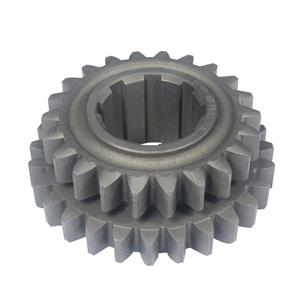
Hobbing gears are manufactured using a cutting process, classified as traditional chip-forming machining. During processing, the hob performs a combined action of reciprocating linear cutting motion and rotary indexing motion. Through the relative movement between the tool and the blank, it progressively cuts out a tooth profile conforming to specifications on the blank. This process involves blank preparation, rough broaching, and finish broaching. For higher precision, subsequent operations like gear grinding may be added. The process is mature and highly controllable.
Precision Forged Gears
Precision forging employs a chip-free or near-chip-free manufacturing process. The metal blank is heated to a plastic state, placed into a pre-formed gear-shaped die, and subjected to high pressure via forging equipment. This causes plastic flow within the die cavity, directly forming the gear tooth structure. Post-forming, only minimal deburring, heat treatment, or localized finishing is typically required to meet application demands. The core of this process lies in die precision and forging parameter control.
2. Tooth Performance and Mechanical Properties
The tooth profile of a hobbed gear is formed by cutting, severing the metal fibers on the tooth surface and creating discontinuous fiber orientation. This process can induce minor stress concentrations at the tooth root due to cutting. While it offers good surface roughness and ensures smooth transmission, the gear's impact resistance, wear resistance, and fatigue strength are relatively average. Its load-bearing capacity is limited by the fundamental properties of the base material.
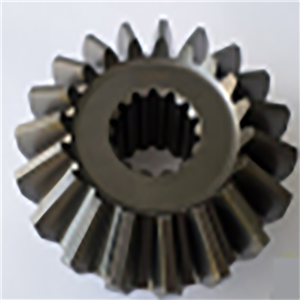
In precision-forged gears, metal fibers remain continuously distributed along the tooth profile without interruption, fully preserving the metal's flow lines. The root area undergoes smooth transition through forging, effectively reducing stress concentration risks. Consequently, precision-forged gears exhibit significantly superior root strength, impact load resistance, wear resistance, and fatigue performance compared to broached gears made from the same material. They are well-suited for heavy-load, high-frequency impact transmission conditions.
3. Precision Grade and Surface Quality
Hobbing gears offer superior precision control. Conventional hobbing processes reliably achieve precision grades of 7–8. When followed by gear grinding, precision can be elevated to grades 4–6, meeting stringent transmission accuracy requirements for precision machine tools and high-speed reducers. Their low surface roughness values enable excellent meshing performance without additional treatment.
The tooth profile accuracy of precision-forged gears is influenced by factors such as die precision and forging deformation. Typically, post-forging accuracy ranges from Grade 9 to 11, making it difficult to directly meet high-precision transmission requirements. To enhance accuracy, subsequent cutting or grinding finishing processes are necessary. However, precision forged gears exhibit excellent tooth profile consistency. During batch production, dimensional deviations among workpieces are minimal. A dense, hardened layer formed during forging exists on the surface, providing superior wear resistance compared to machined tooth surfaces.
4. Production Efficiency and Cost Control
Hobbing is a tooth-by-tooth cutting process, with each tooth requiring considerable machining time. High-precision gears necessitate multiple passes and subsequent finishing, resulting in extended production cycles per piece. However, hobbing equipment offers strong versatility, eliminating the need for custom dies. This makes it suitable for multi-variety, small-batch gear production with low upfront investment costs.
Precision forged gears achieve higher production efficiency, as the tooth profile is formed in a single forging operation on the metal blank, requiring minimal subsequent machining. This process demonstrates clear advantages in batch production. However, it necessitates custom high-precision forging dies, which involve lengthy design and manufacturing cycles and high costs. Significant upfront investment in equipment and dies is required, making it more suitable for large-volume, standardized gear production. Higher production volumes reduce the per-unit die cost allocation.
5. Application Scenario Differences
Hobbing gears are suitable for scenarios demanding high precision, small batches, and diverse varieties, such as precision machine tool spindle gears, small reducer gears, and instrumentation gears. They are particularly well-suited for machining internal gears, multi-stage gears, and other gear types where hobbing offers distinct advantages.
Precision forged gears are suitable for applications demanding high strength, large batches, and harsh operating conditions, such as automotive transmission gears, heavy-duty gears for construction machinery, and transmission gears for mining equipment. They can operate stably under high-speed, heavy-load, and high-impact conditions, extending gear service life.